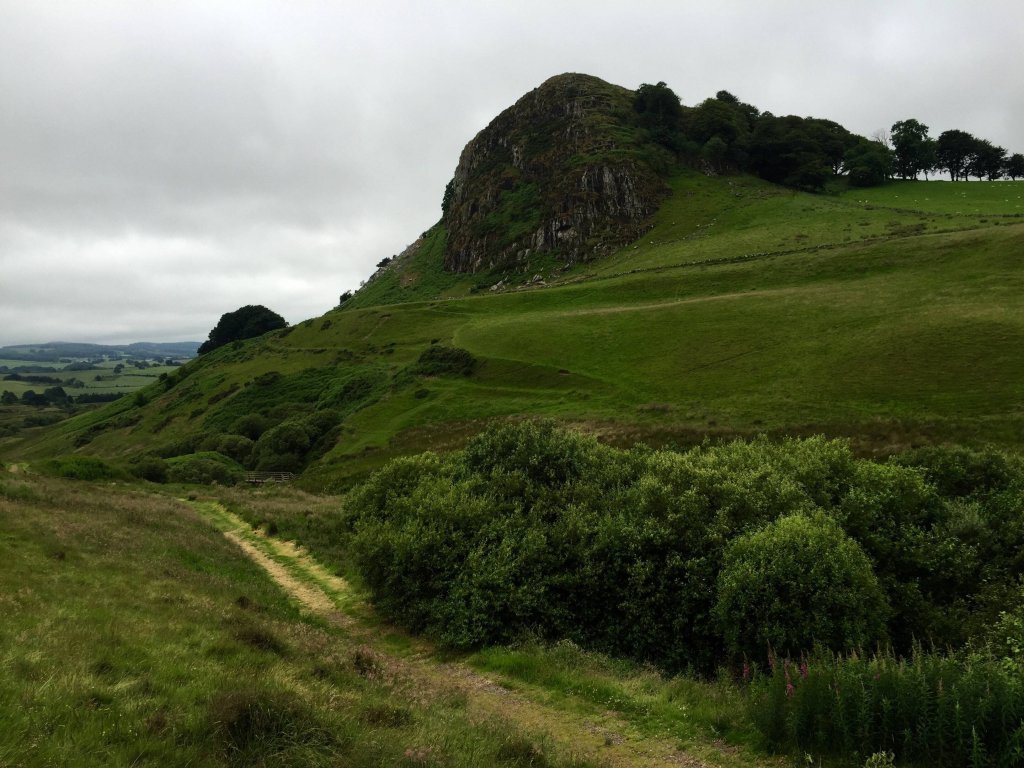
The Battle of Loudoun Hill was fought on May 10, 1307, between a Scots force led by King Robert the Bruce and the English commanded by Aymer de Valence, Earl of Pembroke. It took place beneath Loudoun Hill, Darvel, and ended in a victory for King Robert. It was the king’s first major military victory in the First War of Scottish Independance.
The First War of Scottish Independence was the first of a series of wars between English and Scottish forces. It lasted from the English invasion of Scotland in 1296 until the de jure restoration of Scottish independence with the Treaty of Edinburgh–Northampton in 1328. De facto independence was established in 1314 at the Battle of Bannockburn.
The Romans came and went from Scotland. The first incursion into present-day Scotland by the Roman army was in about AD-80. In AD-82 the Roman army invaded southwest Scotland by marching overland from England as well as with a seaborne force landing on the Ayrshire coast. To hold onto the territory conquered, they built forts, including a chain of forts that crossed the country.
One Roman fort was 31km east of the mouth of the River Irvine, near the present-day Lanarkshire/Ayrshire border (Loudoun Hill).
The Roman army built two major roads north from England. The western route paralleled the present-day M74 motorway, went to their Castledykes fort and onward toward present-day Glasgow. Little has been found of the route from the mouth of the Irvine to Loudoun Hill. General Roy identified the route from the Avon Water east of Loudoun Hill to the Cander Water near present-day Blackwood.